A Critical Analysis of India’s Union Budget 2026

Finance Minister Nirmala Sitharaman presented The Indian Union Budget 2026-27 in Parliament on February 1, 2026 in midst of global economic uncertainty, supply chain realignments and focusing growth on India’s economic needs and fiscal discipline. This year’s Union Budget underscores the importance of certainty in regulations, ease of doing business and reforms to attract long term capital investment.

Key Highlights:-
1. State’s share in central taxes stays 41%
In line with the 16th Finance Commission’s recommendations, Union government will continue to transfer 41% of taxes- STT, Customs, income and corporation tax etc. 4 of the 5 southern states set to gain in their revenues with Tamil Nadu being the sole exception which is going to see a 0.1% dip. With the panel deciding to share taxes accordance with the contribution to the GDP, Gujarat, Maharashtra, Andhra Pradesh, Telangana are set to gain while Madhya Pradesh, Arunachal Pradesh, Uttar Pradesh are set to be amongst the biggest losers.
2. SEZ Goods Allowed in Domestic Market
The government will permit eligible manufacturers in Special Economic Zones (SEZs) to sell goods in the Domestic Tariff Area (DTA) at concessional duty rates, boosting domestic supply and SEZ viability. It was a demand from industries in SEZs as they are facing difficulties to make use of their units due to tariffs from U.S.
3.₹95,692.31 Crore Allocation for Gram Rozgar Abhiyan (New MGNREGA Version)
The budget for rural employment schemes saw a 43% hike with allocation of ₹95,692.31 to the new rural employment scheme under VB- G RAM G Act, 2025 and ₹30,000 crore for the Mahatma Gandhi National Rural employment scheme. However, activists and experts believe that this amount is not sufficient for government to ensure 125 workdays in rural areas.
4. ₹500 Crore Package for ULFA Projects in Assam
In Assam’s biggest peace and reconciliation push, FM on Sunday proposed in Budget 2026-27 an unprecedented special development package of ₹500 crore for United Liberation Front for Assam(Ulfa). The proposed package will lead to investments in green energy and educational centres to transform Assam into a regional development hub.
5. Strategic Mining and High-Speed Rail Corridors for Select States
India plans to create rare-earth corridors in the mineral-rich states of Odisha, Kerala, Andhra Pradesh, and Tamil Nadu to promote mining, processing, research, and manufacturing. The step is in line with ongoing measures for self reliance in manufacture of rare earth permanent magnets (REPM), vital to meet rapidly growing demand from upstream industries in sectors such as EV vehicles, renewable energy, electronics, aerospace, and defence. As announced in the budget, India will soon have several high speed rail corridors and its first own bullet train using indigenous technologies. The bullet train is to being constructed in Mumbai-Ahmedabad route and several high speed rail corridors is to be constructed in Delhi-Varanasi, Mumbai-Pune, Hyderabad-Bengaluru etc.
6. Removal of Basic Customs Duty on Life Saving Drugs
In the Union Budget 2026-27, FM Nirmala Sitharaman announced a significant healthcare relief measure by exempting basic customs duty on 17 key cancer drugs. The policy aims to lower treatment costs for patients battling life-threatening cancers, many of whom depend on medicines which comes at dusk of people’s savings as these often attract substantial duties which inflates retail prices.
7. ₹1 Lakh Crore Urban Challenge Fund
The Union Budget 2026-27 announced the creation of a ₹1 lakh crore Urban Challenge Fund aimed at large-scale city redevelopment, urban transport expansion, and infrastructure modernisation. The fund is expected to support metro rail projects, urban renewal schemes, and redevelopment of congested city centres, addressing the challenges arising from rapid urbanisation.
8. 100% FDI Allowed in Insurance Sector
The government has permitted 100% foreign direct investment in the insurance sector to attract long-term foreign capital, improve insurance penetration, and strengthen financial stability. The move is expected to bring global best practices, innovation, and competition into the Indian insurance market.
9. ₹400 Billion Boost for Electronics Component Manufacturing
An additional ₹400 billion has been allocated to strengthen domestic electronics component manufacturing. The initiative aims to reduce import dependence, enhance supply-chain resilience, and boost exports in sectors such as semiconductors, consumer electronics, and electric vehicles.
10. Increase in Securities Transaction Tax (STT)
The Budget raised the Securities Transaction Tax on futures trading from 0.02% to 0.05%. The STT on options premium was increased from 0.1% to 0.15%, while the exercise STT was raised to 0.125%. The government stated that the move would help augment revenues and regulate excessive speculative activity in the derivatives market.
11. Stock Market Reaction
Following the Budget announcement, Indian equity markets witnessed a sharp decline. The BSE Sensex fell by 1,547 points to close at 80,722.94, while the Nifty 50 declined by 495 points to 24,825.45, reflecting investor concerns over taxation measures and fiscal assumptions.

12. Fiscal Deficit Targeted at 4.5% of GDP
The government reaffirmed its commitment to fiscal consolidation by targeting a fiscal deficit of 4.5% of GDP for FY 2026-27. This aligns with the medium-term fiscal roadmap and aims to maintain macroeconomic stability while supporting growth.
13. Capital Expenditure Increased by 11%
Capital expenditure has been increased by 11% with a focus on infrastructure development across roads, railways, ports, logistics, and renewable energy. The government expects higher public investment to crowd in private investment and support long-term economic growth.
14. Strengthening MSMEs via Credit Guarantee Scheme
To support micro, small, and medium enterprises, the government expanded the Credit Guarantee Scheme by enhancing collateral-free loans and interest subsidies. The measure is expected to improve credit access, boost productivity, and support employment generation.
15. Tax Holiday for Foreign Cloud Providers Using Indian Data Centres
Buried in the Union Budget 2026–27 is a major digital-policy move: a tax holiday until 2047 for foreign cloud service providers operating through Indian data centres. The measure is designed to attract AI-driven investments, expand domestic computing capacity, and position India as a global hub for digital infrastructure. The benefit applies only if global cloud services are delivered from data centres located in India, while services to Indian customers are routed through an Indian reseller. To provide certainty, the Budget also proposes a 15% safe-harbour margin on costs for foreign firms linked to Indian data-centre entities. Together, these steps align with India’s push for digital sovereignty and a stronger role in global AI and cloud ecosystems.

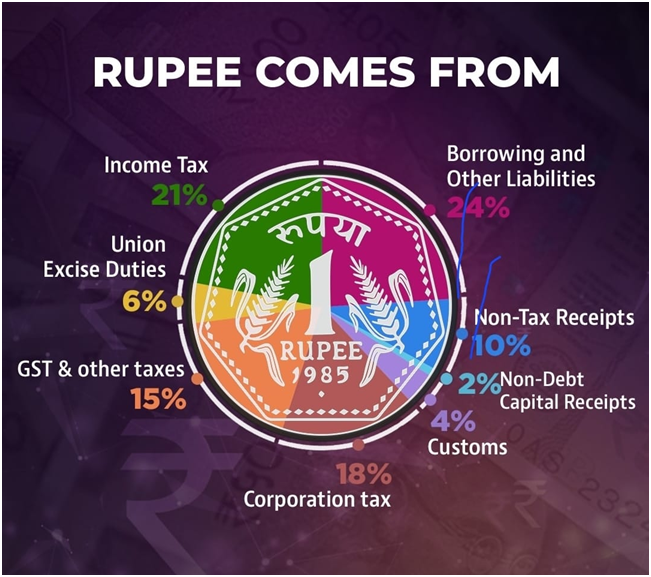
Other Highlights
Tourism Push: Development of 50 eco-tourism and heritage circuits to boost local employment and regional economies.
Tax Compliance Reform: Faceless dispute resolution and faster refunds introduced to simplify direct tax compliance.
Agri Digital Platform: AI-based national crop forecasting and price stabilisation system to reduce farmer distress.
Education & Skilling: Higher allocation for skill development with focus on AI, robotics, and semiconductor sectors.
Green Hydrogen Expansion: Additional incentives to scale production, storage, and exports of green hydrogen.
Asset Monetisation: Accelerated disinvestment and monetisation of highways, railways, and power assets to raise non-tax revenue.
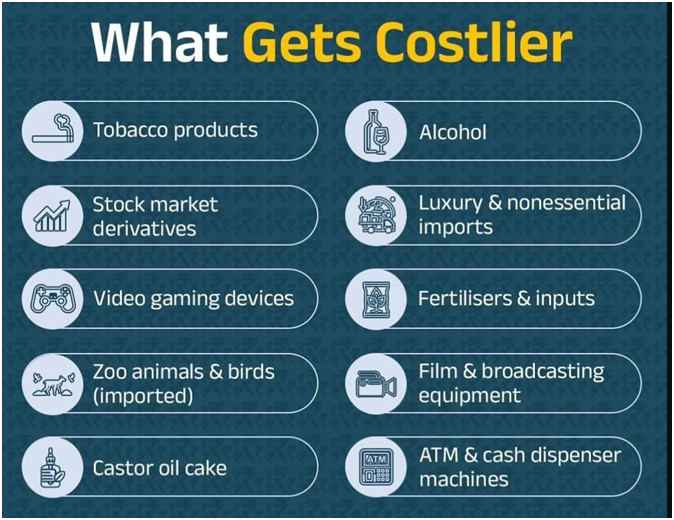
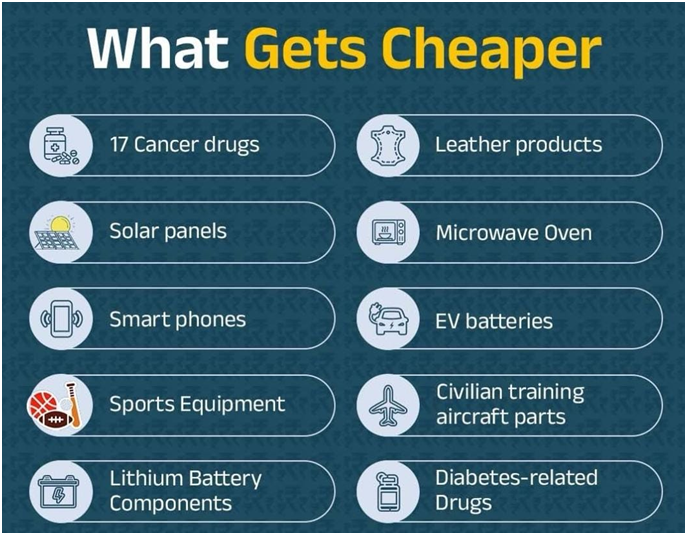
Conclusion: Praise and Criticism
The Union Budget 2026-27 deserves praise for its continued focus on infrastructure creation, manufacturing expansion, green energy, and digital public infrastructure, which are essential for sustaining long-term economic growth. Measures aimed at improving ease of doing business and attracting foreign investment further strengthen India’s growth outlook.
However, the Budget has faced criticism for higher market-related taxes, concerns over adequacy of allocations for rural employment, and challenges related to implementation capacity at the state and local levels. The sharp market reaction also reflects investor apprehensions regarding taxation and fiscal assumptions. Overall, the Budget reflects a cautious approach that prioritises stability and long-term reforms over short-term populism.
This article was written by Anshuman Singhania and Divyansh Sabat.


Comments