An Intro to the Union Budget of India

The Union Budget of India is just around the corner, presented on the 1st of February. Also, like every year, the economics association is coming out with its hallmark event, 'union budget planner.' It seemed like an apt situation to give a brief ‘walk’ through the Union Budget's basics. In this short article, I try to do the same by first discussing the technical definition of the 'Union Budget.' Further along, I'll dive deeper into the intricacies of the budget and how it's divided based on different parameters and among various ministries and industries. Let's begin.
In the given context, a 'Budget' is a nation's annual financial statement, which provides a detailed account of the government's expenditure and income. The Finance Minister presents the Union Budget of India on the 1st of February, in the lower house (Lok Sabha), complementing it with the 'Union Budget's Speech.' Interestingly, around a week before the budget is presented, a traditional 'halwa' ceremony is held that marks the beginning of the printing process of the budget. It's held to recognise the efforts of every staff member who invested in the making of the union budget.
The Union Budget lays down the foundation of the fiscal policy that the country will follow in the coming financial year and gives us an insight into how the taxpayers' money is spent. Its divided into two components,
1. Receipts Budget
• Revenue Receipts
• Capital Receipts
2. Expenditure Budget
• Revenue Expenditure
• Capital Expenditure
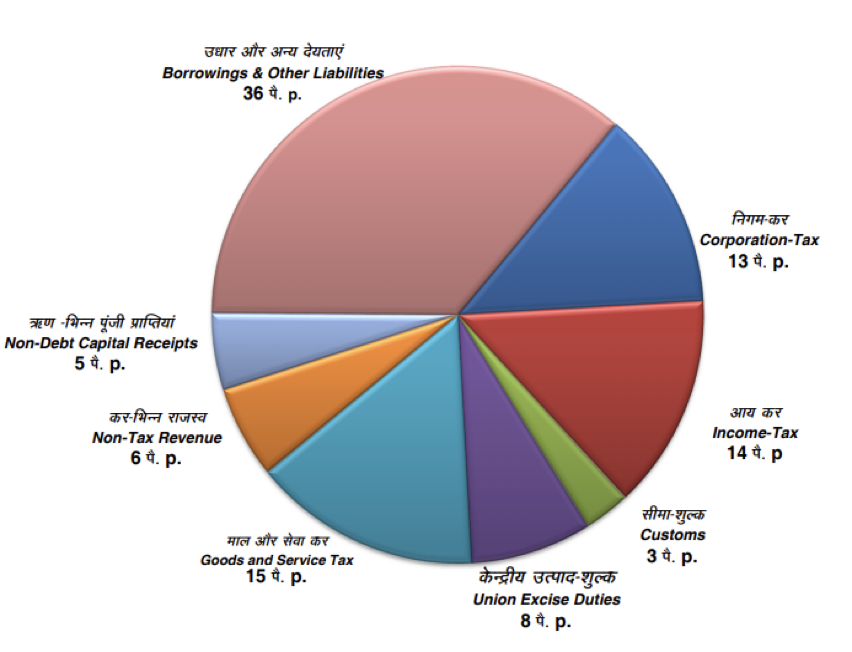
The Receipts Budget lays down the sources of income of the union government. It tells us the sources of earnings for the government and how much it has earned from each one of them. Based on the type of source, Receipts Budget is further divided into 'Revenue Receipts' and 'Capital Receipts.' Revenue receipts include the proceeds from taxes and other duties levied by the Centre, the interest and dividend it receives on its investments, and the government's charges for its services. Capital receipts majorly include loans taken by the government from the public borrowings, foreign countries/institutes, and the borrowings from the RBI.
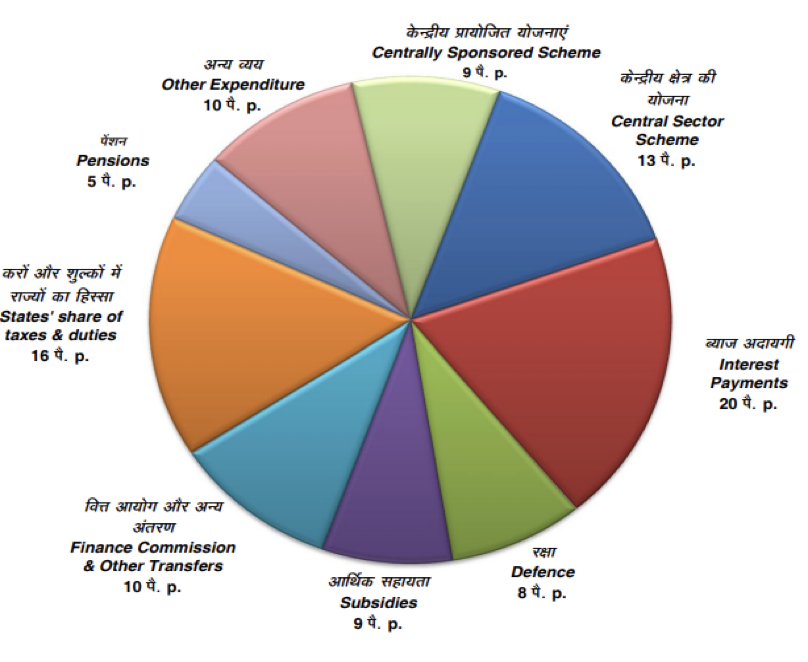
Now, as the name suggests, the Expenditure Budget highlights the allotment of funds for disbursement to different ministries and sectors in the given financial year. The Expenditure budget is also divided into two sections, 'Revenue expenditure' and 'Capital expenditure.' Revenue Expenditure is the recurring expense incurred in the economy's day-to-day running. It neither creates assets nor reduces the liabilities for the government and includes expenses like salaries, pensions, insurance, administration expenditure, etc. Capital Expenditure is a non-recurring expense spent on creating assets and investments for long-term growth and returns. This type of expenditure increases the economy's capital stock and decreases liabilities for the government. Some examples include the construction of railways, ports, roads, schools, and welfare schemes.
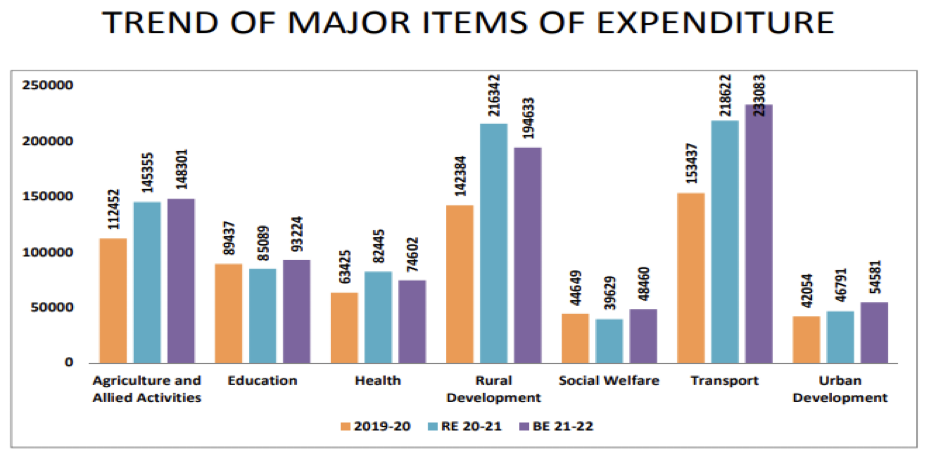
The revenue expenditure is also listed down in terms of the amount spent on various ministries. The major 'big ticket' items are Defence, Home Affairs, Agriculture & Farmers Welfare, Consumer Affairs, Rural Development, HRD, Road Transport & Highways, Railways, Health, etc. Looking at the expenditure patterns of these ministries and comparing them gives us insight into the government's priorities and the state of affairs in the country. E.g., the revised estimates of expenditure on health for FY2020-21 were 82,445 crore rupees, i.e., a massive 23% jump from the previous year due to the pandemic.
One can also comment upon the country's financial health by looking at the budget and, specifically, the deficit of the given FY. The deficit is the total shortfall between the amount spent and the amount earned by the government. There are major three types of deficits that are calculated and tracked in every year's budget, namely,
Revenue Deficit = (Revenue expenditure - Revenue receipts)
Fiscal Deficit = (Revenue expenditure + Capital expenditure - Revenue receipts - Capital receipts)
Primary Deficit = (Fiscal deficit - Interest payments)
Although they don't seem very different from each other, these deficits are an essential parameter to look into.
Union Budget also showcases the overall economic policy framework of the country and is always supplemented with amendments and changes to the finance bill. It might be related to the changes in tax slabs for corporates/individuals, privatisation of PSUs, or even changes in various laws dictating foreign investments in India. The Union Budget is a crucial document that tells us how the government wishes to earn and spend and gives us many insights into the current state of the economy.
-Rashmit Chauhan
References:
Published Article
‘BUDGET AT A GLANCE 2021-2022’
2.) YouTube Video
‘What is Union Budget of India?’


Comments