Brexit: The Untold Story and Aftermath
Europe is suffering from the leadership crisis, as disruptions are continuously increasing across the continent. Brexit, Yellow Vest protests, and the rise of fringe parties to occupy the mainstream position is becoming the new norm in countries like France and Germany.
Earlier this week, Theresa May government faced its biggest defeat in British history when 432 MPs in the House of Commons voted against the deal while 202 voted for it, leaving Britain in the dilemma, having to decide whether to negotiate a new deal before March 29, or to not implement the mandate of the Brexit referendum.
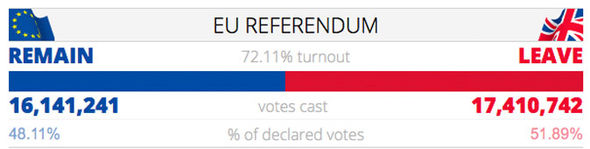
23rd June 2016 was a historic day when the United Kingdom voted 51.89% in favour of leaving the European Union (EU). That was the first instance when the world came to know about growing discontent among the common people for the first time. This came as a shocker to psephologists (who predict outcomes), and media across the globe. Many opinions were formed on what could be the reason for this verdict, some of which blamed the voters, some blamed fake news, some blamed leadership, but nobody tried to blame the rigid ecosystem created and nurtured over decades.
Reasons
1) Over Sized Bureaucracy
The idea of a union of European countries dates back to 1957, when Belgium, France, Italy, Luxembourg, the Netherlands, and West Germany signed the Treaty of Rome, which created the European Economic Community (EEC) and established a customs union, primarily focusing on free trade across member countries. Issues began when it started expanding to social policy and larger bureaucracy in the late '70s, with a separate flag representing the union as well as the formation of a super-government above the present national governments of member nations, ultimately rising as a threat to nations' sovereignty.
The council forms and pushes laws and regulations which are superior to the laws of any member nation. According to the European Community law, where there is a conflict between European law and the law of Member States, European law highly prevails. European Union has the leverage of the single largest market in the world and can 'punish' any nation which doesn't follow the orders from Brussels, Belgium- Head Quarter, EU.
Noteworthy fact that this council is unelected and hence not accountable to people of Europe for its actions, making it an echo chamber. In order to bring any reforms, all 28 nations must agree on changing the treaties upon which this union is founded upon, which is impossible considering several bankrupt countries like Greece which are at the receiving end of perks would not agree. Greece went bankrupt and had to be bailed out by EU, these euro bailouts are generated against EU budget. Portugal and Ireland faced a similar crisis in the previous decade, only to be bailed out by EU.
2) Refugees
The refugee crisis is also a significant force behind the protests, which has an equal amount of economic implications as well as cultural ones. The EU mandated every nation in EU to accept a certain number of refugees, which was unacceptable by the UK. However, Germany under Angela Merkel took in over 890,000 refugees on humanitarian grounds. Social welfare payments for asylum seekers alone amounted to 5.3 billion Euros (US $5.76 billion) in 2015 – an increase of 169 per cent over 2014. In 2016, the government spent 21.7 billion Euros on refugee-related expenditures. Among the 2016 expenditures were 5.3 billion Euros for integration measures and 4.4 billion Euros in social welfare payments for asylees and tolerated refugees. In 2017, Germany’s government allocated 21.3 billion Euros to refugee assistance, a slight decrease from 2016 spending, but more than six per cent of its 2017 annual operating budget of 329 billion Euros.
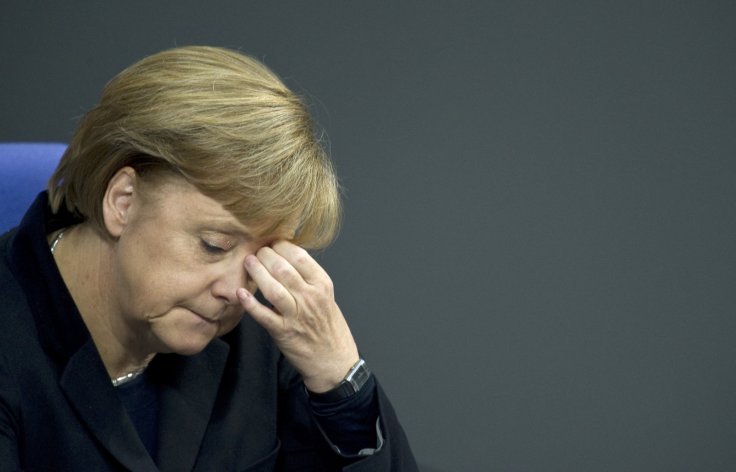
This sudden population increase has also created a housing problem in Germany. For example, Munich’s population rose by 170,000, with house prices more than doubling during the same period. Germany follows progressive taxation going as high as 45%. Of course, taxpayers wouldn’t like their money going to the welfare of foreign nationals while paying more for the housing too. All the factors accumulated into the rise of a far-right political party, AfD- Alternative for Deutschland. Merkel's depreciating popularity has forced her party to declare that she won't be their candidate to Chancellorship in 2021.
3) Ignorant politicians
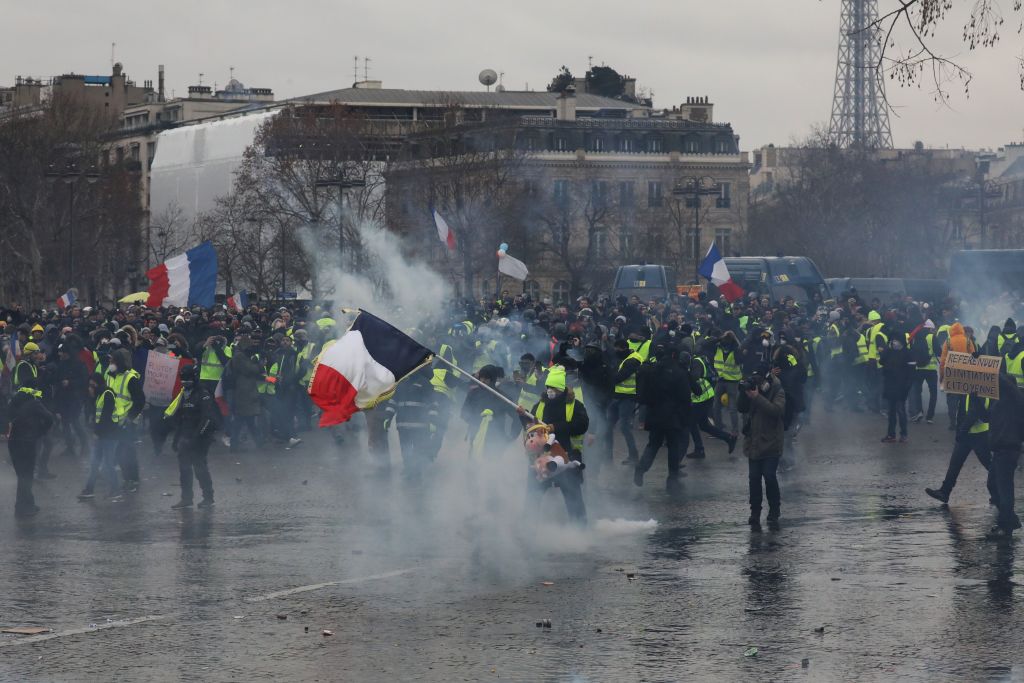
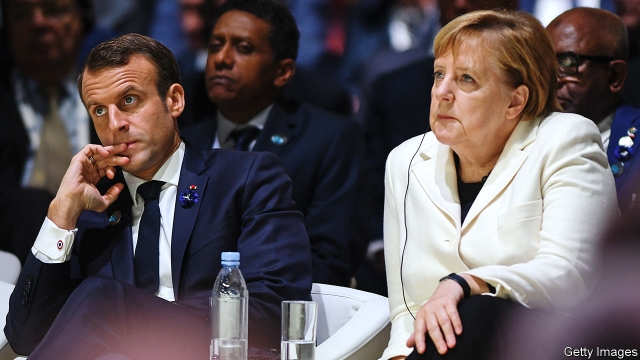
Yellow vest protests in France have been going on for over a month now, primary inhibitor being the green tax imposed on fuel by President Emmanuel Macron, who stormed into power in 2017 with a whopping 66% vote share. But his inability to curb the protests has reflected in his approval rating, a record low of 18%. Macron was supported by several globalists including Barack Obama and Angela Merkel; in Macron, the latter saw an opportunity to keep the EU together. But now she might need to change her opinion. France and Germany have been the strongest proponents of EU, but with domestic political turmoil, the path will be tough for them to convince countries like the Netherlands to not leave the union.
The yellow vest protestors, as well as Brexit voters, belong somewhere in low to middle economic class, disgruntled by the rising cost of living topped by strict regulations. The quantum of anger got increased after Barack Obama’s press conference where he put his weight behind the remain campaign as well as threatened to severely cut trade ties with the United Kingdom.
“I think it’s fair to say that maybe some point down the line there might be a US-UK trade agreement, but it’s not going to happen any time soon because our focus is in negotiating with a big bloc, the European Union, to get a trade agreement done,” he said at a joint conference with David Cameron in April. “The UK is going to be in the back of the queue.”
- Barack Obama
This endorsement backfired for the remain camp, as it is in a negative tone. The entire ‘leave EU’ campaign was based on ‘taking back control’ which sounds like regaining the power lost to the EU. When your opposition’s campaign is focused on the nation’s sovereignty, statements like these further their cause. The remain camp ultimately lost to the leave camp by 3.8 points. David Cameron, the then Prime Minister of UK had to resign as he had supported the 'remain EU' campaign, which failed. This referendum caused a split in the Conservative party. Half supporting remain and the other half rooting for leave. Cameron’s own cabinet minister Boris Johnson was the face of the 'leave' campaign.
Theresa May seems to be on the path to a similar fate, as only half of her fellow Conservative MPs voted for her deal.
May has very few options left as her own party MPs have voted against her:
First has already failed as Labour party has failed to pass the no-confidence motion. Second is not possible as EU doesn’t want to make any compromise. Going for midterm elections will ensure complete washout of the Conservatives, and hence the end of May’s political career. Only two possible options are left, no deal exit or a second referendum.
EU has a long history of ignoring referendums and pushing for another ones until a desirable outcome is produced; Denmark, Ireland and France have been their few recent victims. It will be interesting to see which path Britain chooses between another referendum or a no-deal exit.
– Darshan Amin


Comments