The Bid Picture
- Yashraj Hemant Mehta
- May 30, 2022
- 5 min read
About two years ago, the world around us seemed to crash and come to a halt, yet two economists named Robert Wilson and Paul Milgrom were awarded the Nobel Price in Economics for their Auction Theory. The word ‘auction’ instantly reminds us of the IPL Auction or maybe some eBay bid you woke up for during the night and still lost. At a quick glance, it might seem like a pretty mundane topic to make such a huge deal out of, more so a formality to connect a buyer to a seller to carry out a transaction.
Let’s dive deeper into the world of auctions and we just might find that it is interesting. Suppose you own a very rare signed poster and want to sell it, you might ask your friends or if you are smart, post it on eBay and observe a very entertaining bidding war. There is a high chance you will receive a suitable price, auctions do just that; finding the best buyer for an item so that you get the highest possible amount. In practice, there are two kinds of auctions, open and sealed-bid. The former is used when competitive pricing is imminent and the latter when a record of all bids are needed.
Being a Naruto fan, you come across an auction for a one of a kind manga that is a part of a sought after collection. You check your ever-decreasing bank balance and reckon that you can comfortably pay Rs.500 which is close to the general prices for such mangas. But you realize that you just need two more mangas to complete your collection, you cancel your movie plans and now are ready to pass Rs.700. The first price is known as the common value and the second is the private value(you may value a product more/less than its market value depending on your preferences / unique situation).
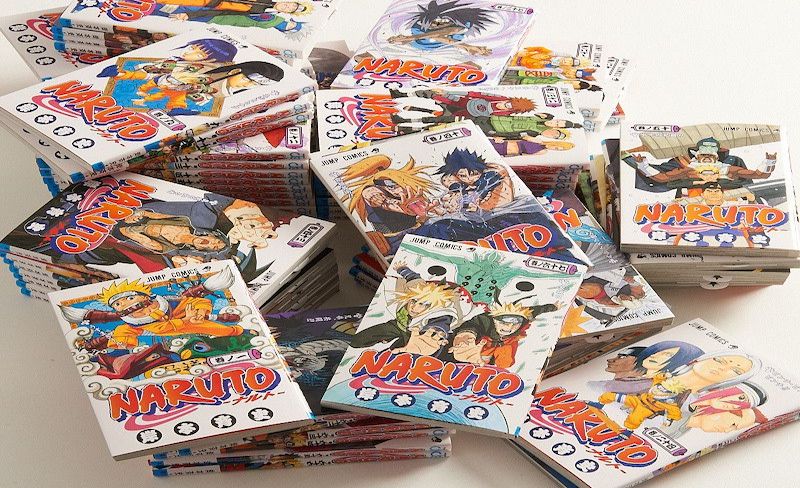
Not so mundane, isn’t it? And this is just the beginning. What we usually see are English Auctions. This involves the auctioneer starting at a low price and potential buyers consecutively bidding higher and higher till nobody else is willing to bid higher. In a caffeine-powered bid war, you were able to outbid the highest bidder and get hold of the manga for Rs.600, pretty good, right? Not so much for the seller because you were willing to pay Rs. 100 more but to win you had to just bid till no other weeb could outbid you. To counter this exact shortcoming, a Dutch-style of auctions was introduced. The seller starts with a very high price and gradually keeps on lowering until the first person is ready to pay that price. In this case, you will stop the bidding at your private value fearing if someone raises their hands at Rs 610 if you waited till Rs.600 and lose your item. Now the seller received more money but wait, you would not be really happy about it. You might feel cheated or salty which in fancy terms is called the ‘winner’s curse’.
Life is never fair, so why should you be? Assume only two people wanted the manga and through your powers of stalking and magical skills, you were able to contact the other bidder. After some discussion both realize that you are able to pay more than them and would always outbid them. You strike a deal, promising to pay the other bidder some small amount to exit the auction so that you are able to get the manga at a much cheaper price. Sweet! Maybe you can still watch the movie, but there might be a slight problem and you may have the law enforcement on your door because what you did is called ‘Price Collusion’ which is illegal in many countries. Looking at the collection of your mangas, you know that if you could just complete it by buying two more, you will easily be able to see it for a huge profit and finally afford the expensive snacks inside the theatre. Lady Luck is on your side and the first one is being auctioned right now, albeit for a higher price than you would prefer to. After gaining, the first manga, you might search everywhere for that last manga and could come to the horrid realization that the last manga is not available anywhere at the moment, there is even a possibility that you might never get it. Being a pessimistic self, you could consider this situation and not bid for the first manga itself. This simple situation is encountered numerous times, be it in the real estate industry or Telecom Companies bidding for the spectrum rights. The seller suffers a loss because of factors not under their direct control. Our Nobel Laureates solved precisely this problem.
Introducing the new buzzword in the realm of Behavioral Economics, ‘Simultaneous Multiple Round Auction’(SMRA). Our economists wanted to answer a very simple yet important question - How to design an auction for allocating the frequency bands of a country in the most efficient and profitable way. Before arriving at the solution, we need to understand the spectrum market. There are numerous TeleCom providers in the market that use specific spectrum bands to transmit their signals and allow their consumers to use their cellular services. These spectrum bands are owned by the government and are auctioned to different bidders region wise. In India’s case, there exists 22 telecom circles and the bids for each circle is independent of each other. Most companies would prefer to have bands for all regions so as to increase connectivity, market capitalization and customer retention.
With some knowledge of spectrum auctions under our belts, let us dive into understanding SMRA. It is similar to an English Auction where the government or the auctioning agency starts with a reserve price and invites bids for all the bands simultaneous covering all geographic regions. Here comes the change, after this round of bids, the highest bid for each band and region is declared and the bids for every bidder is made public. At this stage, each participant is allowed to decrease, increase or withdraw their bid, after which the bids are again made public. This process goes on until the bids remain constant for two consecutive rounds, resulting in the highest bidder of this last round winning the auction.
Going back to the Manga example, if SMRA was followed, you could place bids for both mangas together and thus would be willing to pay the maximum amount possible that corresponds to the value you associate with the items and would increase the certainty of getting both mangas together or neither. It is considered a win-win situation for both parties maximizing the collective benefit of the society which is what the main motive always was!
That was some intense barrage of information regarding Auctions and yet we have just touched the tip of the iceberg. If this newfound world of auctions has captivated your minds as much as behavioural economists all over the globe, you have many more interesting things to uncover. A great starting point would be Second price Auctions which is how eBay actually tricks customers bid the highest they can. Welcome to the Bid Picture!

-Yashraj Hemant Mehta


Comments